
Rockingham County Sheriff Sam Page's GOP-primary win over N.C. Senate leader Phil Berger has been the talk of the state since his 23-vote margin of victory was solidified in a post-balloting canvass. Everyone wonders how he did it.
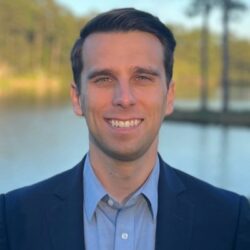
One of Page's advisers, pollster/strategist Patrick Sebastian, offered his version of the election with these key points:
Page doubled down on Rockingham County
Senate District 26 covers Rockingham County and much of rural Guilford County. Guilford voters outnumber Rockingham's, which would suggest Guilford was the key battleground.
That's not how the Page camp played it. Instead of leaning into a likely Berger strength, they leaned into the sheriff's popularity in Rockingham County.
“They were trying to win the existing electorate; we were trying to change it,†Sebastian says. “We spent a lot of time identifying voters who supported Sam but didn't have a strong history of voting in Republican primaries, and then [on] actually getting them to the polls. Those are the votes that made the difference.â€
In Rockingham, 13,591 people voted in the Senate 26 primary. That's more than voted in the GOP presidential primaries in 2024 (13,108) or in 2016 (11,271).
It's also more than the votes cast in 2024's Republican gubernatorial (12,861) and lieutenant governor (12,963) primaries. The lieutenant governor's field that year featured two Rockingham candidates: Page and Eden lawyer Seth Woodall, who in March beat incumbent Rep. Reece Pyrtle, R-Rockingham, in House District 65.
“In a race like this, persuasion matters, but turnout matters more,†Sebastian says.
Going negative — and reaping the blowback
Berger hoped to convince Guilford voters to shun Page's candidacy. He went negative early and often, saturating airwaves, wires and mailboxes with attacks on Page that criticized the challenger's work as sheriff.
It didn't work. As expected, Berger won Guilford, but turnout there lagged.
Sebastian cites three problems with Berger's media onslaught.
* It antagonized Rockingham voters. “Negative advertising can work, but there's a point where it pushes people the other direction,†he says. “We saw that with voters who felt a personal connection to Sam and didn't like seeing him attacked that way.â€
* The spending was inefficient. The Triad is the state's third-biggest media market, so many who saw Berger's TV ads couldn't vote in Senate 26.
* Berger's forces never found a message that stuck, possibly because they had at least $10 million at their disposal, counting so-called independent expenditures. Lacking a budget constraint, “they were constantly on and off different ads, swapping messages in and out,†Sebastian says. “Even people in the business were asking what the strategy was, because they never really settled on a single message.â€
He adds that the Berger camp's “fatal error was assuming Rockingham County voters — many of whom have known Sam for decades — would suddenly stop believing their own eyes and trust an outlandish 30-second ad.
“When you have that kind of money and spending advantage, you're expected to figure it out.â€
Silent cheerleaders
One handicap Page faced throughout the campaign was that Berger's stature in the General Assembly meant that endorsements and donations were hard to come by. Few wanted to risk stepping up publicly, lest Page lose and leave them facing potential retaliation. Page avoided putting them on the spot.
Still, Sebastian says, the sheriff had plenty of behind-the-scenes support.
“There were quiet ‘attaboys' from members of the House and Senate and a few of them considered going public, but we didn't push it,†he says. “We understood the position they were in, and it wasn't central to our strategy.â€
SchadenfreudeÂ
The Berger forces also showed hints of overconfidence, Sebastian says, despite early polls suggesting the Senate leader's vulnerability.
He cites Jim Blaine, a former Berger chief of staff and adviser whose Differentiators Data firm was involved in the campaign. The consulting firm works for many businesses and institutions across the state. Blaine went on Spectrum News' Tim Boyum's podcast last August and unloaded on Page.
“By the time that race is over, he may have to move out of the county,†Blaine said of Page during the podcast. “Some of these people that have axes to grind with [Berger] have pushed a dupe out into the road, and he's going to get hit by a car.â€
Sebastian says “some political ‘experts†on TV [said], with no doubt in their voices, that the electorate would be overwhelmingly concentrated in Guilford County — which would have made the race unwinnable for Page — and they were wrong, Sebastian says. “When they get the basic premise wrong, it's hard to see why the media should still be treating them as an authority on explaining the result.â€
Sebastian is a Raleigh native who started working on Republican campaigns in 2008, including for his uncle Pat McCrory's unsuccessful 2008 gubernatorial bid, according to his LinkedIn profile. Since then, he's had several campaign and political jobs in North Carolina, Georgia, New Jersey and South Carolina, while also running his own communications and polling firms. He lives in Pinehurst.






/2026/04/01/69cd5c50a6604087184428.jpg "\"Είναι ένα τεράστιο βήμα προς το όνειρό μου\" : Η Tya Zebrowski, το νέο γαλλικό ψήγμα σερφ, κάνει το ντεμπούτο της")